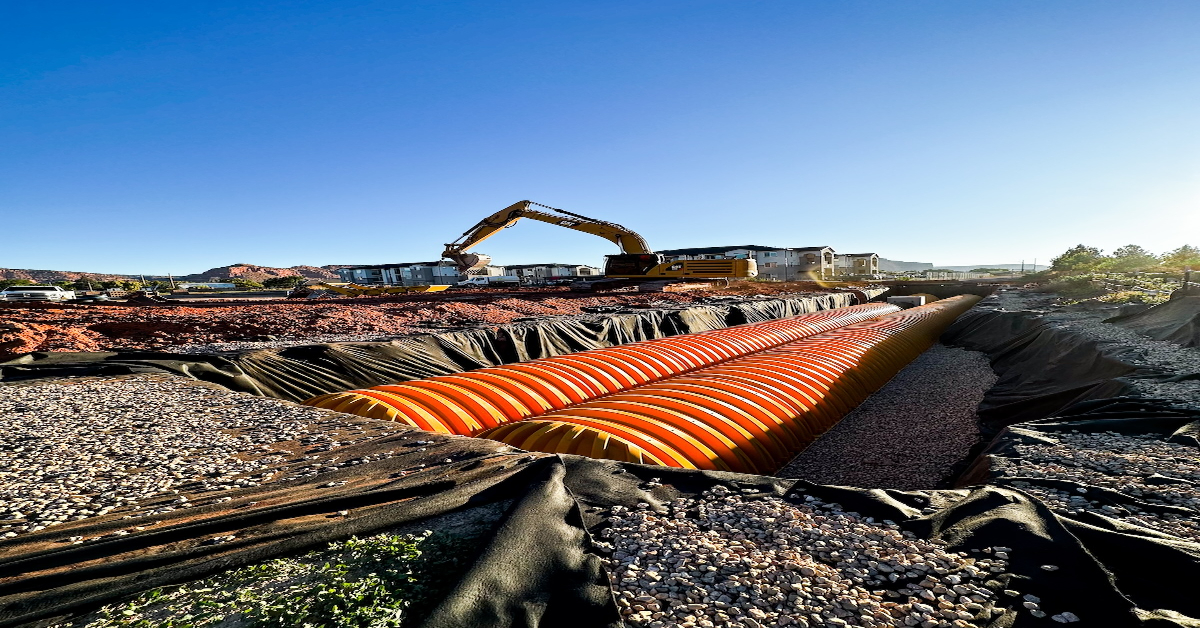
Prime Excavating delivers underground water, sewer, storm drain, and dry utilities across St. George, Washington, and Hurricane, with processes built for safety, restoration, and first‑pass city acceptance; explore our Underground Utilities capabilities for scope, trenching methods, and closeout workflows used in municipal corridors. Addressing utility installation challenges is crucial for success in these projects.
Unexpected Underground Obstacles
Utility installation challenges often arise from unexpected geological formations that complicate the process.
Rock formations
- Challenge: Basalt, caliche, and fractured rock common in Washington County can slow trench production, wear tooling, and raise export and bedding costs; our civil and subdivision groundwork overview explains how grading and subgrade preparation influence utility performance before any pipe goes in
- Solutions: Use pre‑bid test pits and geotechnical notes to choose hammering, rock trenchers, or HDD, and align pave‑back expectations in paved ROW using our Roadwork & Restoration standards to budget CDF and reinstatement correctly; for sequencing examples in rock, review Underground Utilities.
Existing infrastructure conflicts
- Challenge: Unknown or shallow lines create strike risks and separation conflicts at crossings and parallels; coordinating 811 with private EM/GPR locating and potholing, then capturing GNSS as‑builts, reduces redesigns and accelerates acceptance
- Solutions: Standardize markings and ROW expectations using APWA resources and kick off utility‑locator coordination through our Contact page so crews begin with verified depths and clearances.
Soil and Water Table Complications
Wet soils and erosion
- Challenge: Saturated subgrades reduce compaction, promote trench wall sloughing, and risk turbid runoff violations during restorations in the right‑of‑way
- Solutions: Phase erosion controls and street sweeping through final pave‑back with our Roadwork & Restoration approach, and align materials and surface finish with APWA standards to pass inspection the first time.
Soil stability risks
Understanding the utility installation challenges faced during projects can lead to more efficient solutions and improved outcomes.
- Challenge: Variable fills and collapsible soils compromise pipe‑zone support and long‑term pavement performance if bedding and lift thickness aren’t controlled.
- Solutions: Build to municipal/APWA details for bedding, compaction, and pavement structure, and stabilize the platform before trenching using the best practices in our Site Grading guide to improve load distribution and drainage.
Weather‑Related Delays
Rain and freeze impacts
- Challenge: Storm events flood open trenches, and freeze‑thaw cycles degrade compaction and surface tolerances ahead of restoration.
- Solutions: Limit open trench length, deploy pumps and trench plugs before weather, and confirm restoration sequencing and tolerances within Roadwork & Restoration so inspections can be held and lanes reopened on schedule
Stormwater mitigation
- Challenge: Permit compliance demands active erosion and sediment controls with predictable restoration quality in ROW during utility work.
- Solutions: Integrate BMPs with production phases and restore pavements to city/APWA standards—thickness, joints, and finish—to achieve first‑pass acceptance and straightforward warranties.
Equipment Access Limitations
Weather can exacerbate utility installation challenges, making careful planning essential.
Urban site restrictions
- Challenge: Tight corridors and traffic windows limit trench width, spoil placement, and shoring options in active ROW.
- Solutions: Select compact equipment and use flowable fill to reduce lift counts, then pre‑confirm sawcut and pave‑back details using Roadwork & Restoration to avoid rework on constrained streets.
Terrain navigation
- Challenge: Slopes and uneven ground affect machine stability, trench accuracy, and spoil handling on subdivision and roadway jobs.
- Solutions: Use GNSS guidance for alignment and grade, plan haul paths to prevent tracking fines, and stage bedding imports efficiently; practical workflows are outlined in Underground Utilities for maintaining production on difficult terrain.
Regulatory Hurdles and Permit Delays
State and municipal slowdowns
- Challenge: Submittals, inspections, and closeout packages can stall production and push restorations into poor weather windows.
- Solutions: Provide GIS‑ready as‑builts, follow APWA/municipal restoration standards, and schedule segmented inspections—our approval flow in Underground Utilities shows how contractors keep momentum.
Change order management
- Challenge: Unforeseen rock, conflicts, or groundwater can trigger scope shifts that escalate cost and time.
- Solutions: Maintain test‑pit photos, daily condition logs, and unit pricing for rock, dewatering, and restoration upgrades, and start change‑ready utility coordination with our Contact team to protect the schedule.
Budget Overruns and Scheduling Setbacks
Realistic cost forecasting
- Challenge: Underestimating trench production, rock contingencies, and restoration standards leads to budget creep.
- Solutions: Calibrate unit rates using pre‑bid investigations and include realistic CDF and pave‑back based on our Roadwork & Restoration specifications for paved corridors.
Milestone planning
- Challenge: Missed procurement and inspection windows ripple into restoration delays and potential LDs.
- Solutions: Tie milestones to measurable quantities per segment, pre‑book inspections, and stage materials and traffic control; crew sizing and sequencing pointers appear in Underground Utilities.
Safety Risks During Trenching
Collapse prevention
- Challenge: Trench wall failures remain a leading hazard in utility work across variable soils and depths.
- Solutions: Apply NUCA’s “Slope, Shore, Shield” guidance and prohibit entry into unprotected trenches five feet or deeper, reinforced via daily toolbox talks and competent‑person checks.
PPE enforcement
During the planning stages, it is essential to anticipate utility installation challenges that may arise.
- Challenge: Busy corridors increase exposure to equipment, traffic, and energized utilities during installation.
- Solutions: Enforce PPE and spotter protocols, coordinate lane closures with restoration to shorten exposure, and align site practices with NUCA safety expectations for trenching.
Training and Workforce Gaps
Operator certification
Utility Installation Challenges
Addressing the common utility installation challenges can significantly improve project outcomes and safety.
- Challenge: Inconsistent experience on HDD, dewatering, and shoring can reduce production and raise risk.
- Solutions: Assign certified operators to specialized scopes and use HDD and trench‑support checklists grounded in NUCA safety guidance during daily huddles.
Site crew education.
- Challenge: New crew members may miss bedding, compaction, and pave‑back details required by APWA and city standards.
- Solutions: Brief teams on APWA/municipal details and verify densities and tolerances before inspection, following the Roadwork & Restoration workflow for consistent acceptance.
Utility locator coordination
Coordinate 811, private locating, and potholing on all crossings; follow APWA color codes on markings; and capture GNSS as‑builts to reduce strikes and streamline closeout.
Cost buffer planning
Carry contingency for rock, export, groundwater control, and CDF in paved ROW based on test pits and restoration standards to keep budgets predictable.
Weather‑resistant materials
Use moisture‑tolerant backfill or flowable fill in paved corridors and protect pipe‑zone aggregates to meet compaction requirements despite storms or freeze‑thaw cycles.
Local context: St. George, Hurricane, Washington
Southern Utah’s basalt outcrops, caliche layers, and flash‑flood‑prone corridors demand rock removal strategies, robust erosion controls, and tight ROW restorations per APWA and city standards; Roadwork & Restoration shows how traffic control and pave‑back are phased to minimize disruption and pass inspections.
How Prime Excavating mitigates risk
- End‑to‑end wet and dry utilities with compliant bedding, compaction, and city‑approved restorations as documented on Underground Utilities for municipal corridors.
- HDD vs. open‑cut selection verified by test pits and locating/potholing to protect existing assets and reduce surface disruption in sensitive crossings.
- GNSS digital as‑builts to accelerate municipal acceptance and simplify future locates after utility closeout.
- Restoration‑first execution with sawcut, mill, and pave per APWA/city standards in Roadwork & Restoration to ensure durable, compliant ROW results.
Call to Action
Plan the next St. George, Washington, or Hurricane utility run with rock, groundwater, and restoration contingencies dialed in—start utility coordination and pre‑bid subsurface verification with our Contact team today.
FAQs:
Q1: How can unexpected rock be budgeted without inflating bids?
A: Use pre‑bid test pits and set unit prices for hammering or rock trenchers, include export and CDF contingencies, and align pave‑back with APWA/city standards to avoid late overruns.
Q2: What prevents utility strikes when maps are unreliable?
A: Combine 811 and private EM/GPR locating with potholing, follow APWA color codes, and collect GNSS as‑builts for closeout and future utility locates.
Q3: How is trench stability managed in wet or collapsible soils?
A: Moisture‑condition the subgrade, use specified bedding and compaction by lift, and select flowable fill in constrained or paved corridors when standards require it.
Q4: What’s the fastest path to municipal acceptance and pave‑back?
A: Build to APWA/municipal details for sawcut and thickness, schedule segmented inspections, and submit GIS‑ready as‑builts at closeout.
Q5: When should HDD be chosen over open cut?
A: For roadway and waterway crossings or dense corridors to minimize disruption, after verifying separations with potholing and locator data in line with federal utility accommodation practices.
Q6: How do local conditions affect utilities in Southern Utah?
A: Expect rock and caliche, flash‑flood sensitivity, and strict restoration details, so plan rock contingencies, erosion controls, and APWA‑aligned pave‑back from the outset.
Q7: Which safety practices are non‑negotiable in trenches?
A: Follow NUCA’s “Slope, Shore, Shield,” use engineered systems where required, and never allow entry into unprotected trenches five feet or deeper; reinforce with daily briefings.
Q8: What scheduling tactics reduce the risk of overruns?
A: Tie milestones to measurable quantities per segment, pre‑book inspections, and stage materials and traffic control for continuous flow through restoration